# Matcha vs. Coffee: Which One Should Power Your Mornings?
It's the debate that seems to come up every time someone spots a bright green cup on our counter instead of the usual black one. "Wait, is that better than coffee?" Honestly, we get asked this almost daily at [Pekoe](https://mypekoe.com/), and the answer isn't as simple as picking a winner. Both have their place. But once you understand what's actually happening in each cup, it gets a lot easier to figure out which one your mornings actually need.
## The Caffeine Isn't the Same Kind of Caffeine
Here's the part most people don't realise until they've tried both side by side. Coffee delivers caffeine fast and hard. It hits your bloodstream quickly, gives you that immediate jolt, and then, a few hours later, drops you just as fast. That crash is real, and if you've ever reached for a second or third cup just to get through a 3 PM slump, you already know exactly what we mean.
**[Matcha](https://mypekoe.com/collections/matcha)** works differently, and the reason comes down to an amino acid called L-theanine, which occurs naturally in the tea leaf. L-theanine slows the release of caffeine into your system and promotes a calmer kind of alertness, so instead of a spike-and-crash pattern, you get a longer, steadier stretch of focus. Most people describe it as feeling awake without feeling wired — no jitters, no racing heart, no crash waiting for you at lunchtime.
Cup for cup, Matcha also contains less caffeine than coffee, though it's still enough to properly wake you up. So if you're someone who loves the ritual of coffee but not what it does to you by mid-morning, this is usually where Matcha starts to make sense.
## What You're Actually Drinking
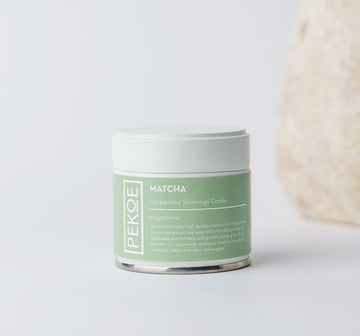
Coffee is brewed — you extract flavour and caffeine from the ground beans, then discard the grounds. Matcha is different in a way that matters more than people realise: because it's a whole, finely ground leaf whisked directly into water or milk, you're consuming the entire leaf, not just an extraction from it. That means you're also getting the chlorophyll, antioxidants, and nutrients that would otherwise be lost.
This is a big part of why Matcha carries such a strong antioxidant profile. The catechins in Matcha are known to help fight free radicals and support the body's natural defences, something coffee, for all its benefits, simply doesn't offer in the same way.
## The Focus Factor
Coffee lovers will tell you nothing beats that first sip for getting the brain moving, and there's truth to that — coffee is genuinely good at snapping you into alertness. But if you need sustained focus rather than a quick spike, Matcha tends to hold up better over a longer stretch. Writers, students, and people working through long meetings often notice this the most: the initial lift from coffee fades, while a bowl of Matcha tends to carry them further into the day without needing a refill.
It's less about one being "smarter" than the other and more about what kind of energy your morning actually calls for. A quick jolt before a workout might genuinely call for coffee. A long, focus-heavy work session might be better served by Matcha.
## Gut and Body Considerations
Coffee is acidic, and for some people, that means stomach discomfort, especially on an empty stomach. Matcha is naturally gentler on digestion, and its chlorophyll content is often credited with supporting the body's own detox processes. It's also been linked to metabolism support, potentially aiding fat oxidation, which is part of why so many people have started swapping their morning coffee for a Matcha latte instead.
None of this means coffee is "bad" for you. It has its own well-documented benefits too. It simply means the two drinks are doing different things to your body, and depending on what you're looking for, one might suit you better than the other on any given day.
## Taste and Ritual
This is where personal preference takes over completely. Coffee is bold, roasted, and instantly familiar to most people who grew up drinking it. Matcha is grassy, slightly sweet, and a little more of an acquired taste at first — though most people who stick with it end up loving that vegetal, umami quality once their palate adjusts.
There's also something to be said for the ritual itself. Whisking Matcha properly takes a couple of minutes of full attention — sifting the powder, adding water at the right temperature, whisking briskly until it froths. It's a small pocket of calm that a lot of people say they didn't know they needed until they started doing it daily. Coffee, especially the quick espresso-shot kind, doesn't really offer that same built-in pause.
## So, Which One Should You Choose?
Honestly, you don't have to choose just one. A lot of our regulars at Pekoe drink coffee in the morning and switch to Matcha in the early afternoon, using it as a gentler alternative to a second or third coffee. Others have replaced coffee entirely, finding that Matcha gives them everything they were looking for minus the crash.
If you're constantly dealing with energy dips, stomach sensitivity, or you're simply looking for a calmer, longer-lasting kind of focus, Matcha is worth genuinely trying instead of dismissing as a trend. If you love the bold, roasted intensity of coffee and it's never given you trouble, there's no real reason to give it up either.
The best morning routine isn't necessarily the one everyone else is doing. It's the one that actually leaves you feeling good by the time lunch rolls around. For a lot of people, that's turning out to be a bowl of good Matcha rather than another cup of coffee — and once you've tasted a properly whisked one, it's easy to understand why.
For more information
TikTok: [mypekoe](https://www.tiktok.com/@mypekoe)
Instagram: [mypekoe](https://www.instagram.com/mypekoe/)
Facebook: [mypekoe](https://www.facebook.com/mypekoe/)